“Kraft or coated?” is usually the first decision in a paper bag project, and it usually gets made on look rather than on function. Both are correct — for different shops, different products and different budgets.
We produce both on the same line in Xiamen, at a 500-piece minimum. Here is how the choice actually plays out.
The two base papers
Kraft paper is uncoated. It is made from wood pulp with a natural brown tone, a visible fibre and a matte, slightly rough surface. It takes ink like a sponge: colours print softer, blacks go grey-brown, and fine detail fills in.
Coated art paper has a clay coating pressed onto the surface. It is smooth, white and closed. Ink sits on top instead of sinking in, so colours come out saturated and photographs hold their contrast.
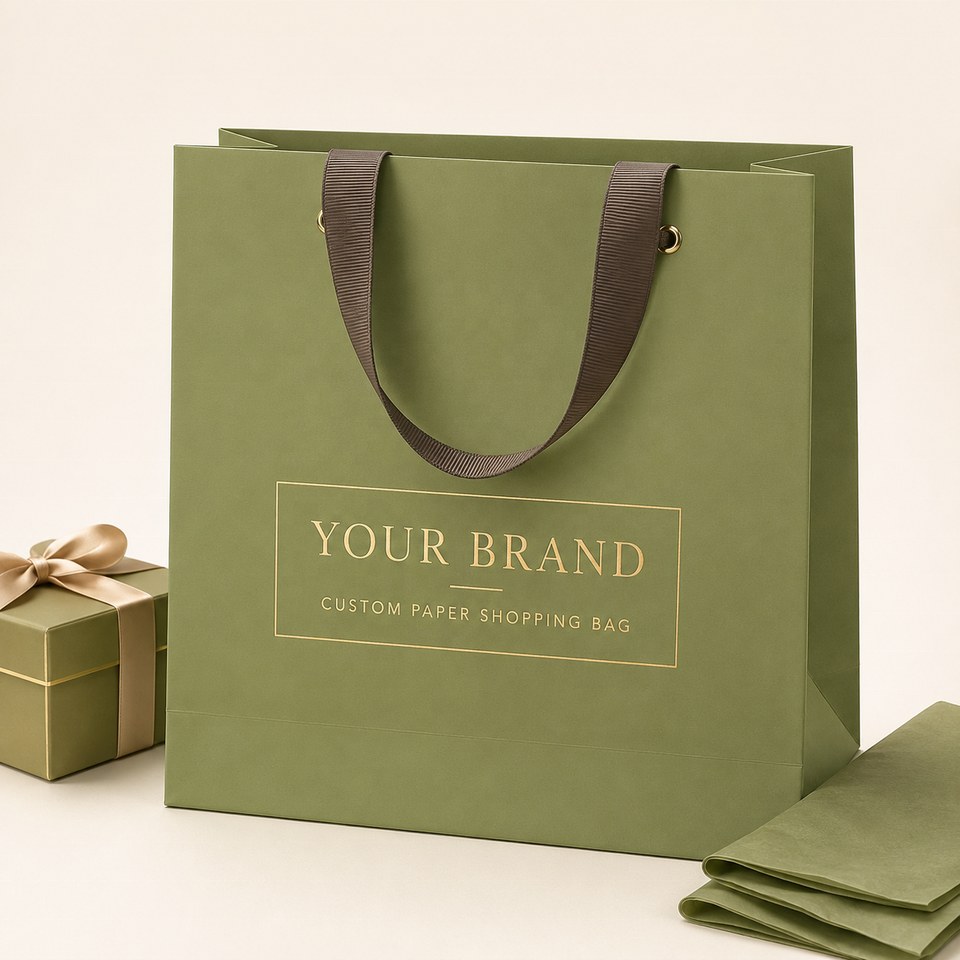
A third option sits between them: coated paper with lamination. A 128–157 gsm art paper gets a gloss or matte film. This is the standard for retail bags that need to survive a wet hand, a rainy pavement and a full day of carrying.
What each is good at
Kraft reads natural, honest and premium-in-a-quiet-way. It suits organic food, coffee, bread, soap, candles, plant shops, and any brand that does not want to look like it spent a lot on packaging. It is also the cheaper base paper, and it hides scuffs better than white stock.
Coated art paper reads commercial and precise. It suits cosmetics, fashion, jewellery, electronics accessories, and anything where the bag is part of the visual identity. Full-colour photography, gradients and fine type all hold up.
One honest limitation: kraft cannot deliver a true bright red, a deep navy or a clean pastel. If brand colour matters more than texture, choose coated.
Handle choices decide the feel
Paper twist handle. Cheapest, matches the bag, and is the default for grocery and takeaway. It creases over time.
Flat paper handle. Stronger than twist, glued inside the bag, and it looks more considered. Good for retail.
Cotton or PP rope handle. Passes through a punched hole and is knotted. Cotton feels soft and premium; PP is stronger and cheaper. Both survive heavy loads.
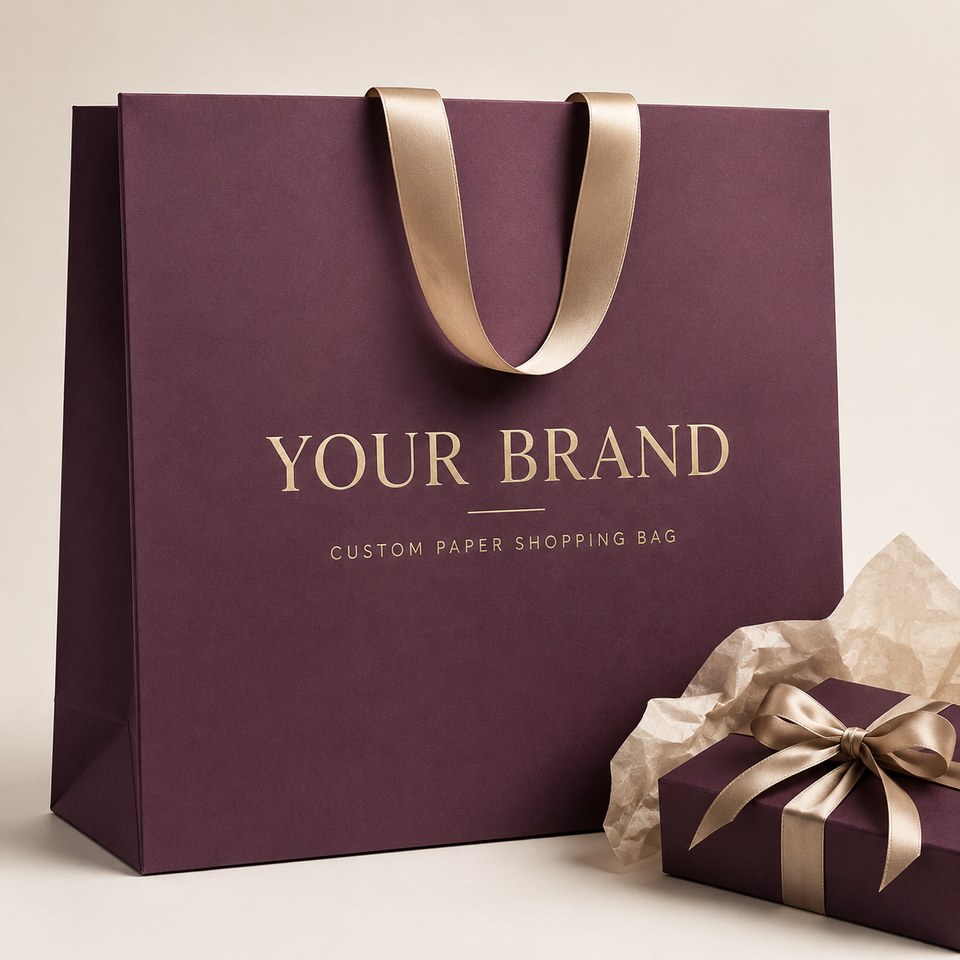
Satin ribbon handle. Glued and folded inside the bag top. This is the luxury signal — it is the handle on our burgundy satin ribbon bag and the white satin ribbon bag. It is hand-applied, so it adds labour, not just material.
Ribbon handles also demand a stiffer bag body. A soft bag with a ribbon handle collapses at the top and looks tired by the second use.
Weight, and how much the bag carries
For a shopping bag, 100–120 gsm kraft is a light bag for clothing or a single box. 150 gsm kraft or 128 gsm coated plus lamination is the retail standard. Above 210 gsm the bag becomes board-like and is usually reserved for very heavy or very premium items.
A practical rule from our line: match the paper to the load, then add one step for perceived quality. Under-spec the paper and the handle tears through the top before the print fades.
| Requirement | Kraft | Coated + lamination |
|---|---|---|
| Bright brand colour | Poor | Excellent |
| Full-colour photo | Muddy | Sharp |
| Natural / eco signal | Strong | Weak unless printed as texture |
| Water resistance | Low | High |
| Relative unit cost | Lower | +10–25% |
Printing on kraft: what to expect
One-colour printing on kraft is the safest and most attractive use: a single dark ink, a logo, a line of type. It looks intentional.
Four-colour process on kraft is possible but the paper tone shifts everything. Whites disappear, yellows go ochre, and light blues turn grey. Designers who know this use the brown as a colour instead of fighting it.
White ink on kraft is the other route: a white underlay, then colour on top. It works, it costs an extra pass, and it removes most of the natural texture benefit.
Why the minimum is 500
Bag production is a sequence of short machine steps — printing, laminating, die-cutting, handle punching, gluing, folding. Each step has a make-ready. Below 500 pieces the make-ready is a large share of the cost, and the per-bag price stops being meaningful.
At 500 pieces you get a real production run: consistent colour across the batch, proper handle testing, and a price that holds.
What to send us for a quote
Five things get you a usable number the first time: bag style and size (width × height × gusset), base paper and weight, handle type, print colours, and quantity. Add the artwork if it exists.
If you have none of that yet, send the product and a photo of a bag you like. We will propose a spec.
Our current range is on the custom paper bags page; the coated and laminated options are shown on the olive green coated shopping bag.
FAQ
Can kraft bags be laminated? Yes, but the matte film removes most of the fibre texture — you keep the brown tone, not the feel. If texture is the reason you chose kraft, skip the film.
Are kraft bags actually more recyclable? Uncoated kraft recycles easily. Laminated and foil-stamped bags are harder to recycle in practice, even when the base paper is fine. If a customer asks, answer honestly.
What is the lead time? Sample 5–7 working days, mass production 5–7 working days after approval, FOB Xiamen.
Under the minimum? Tell us the quantity you actually need — small runs get quoted case by case.